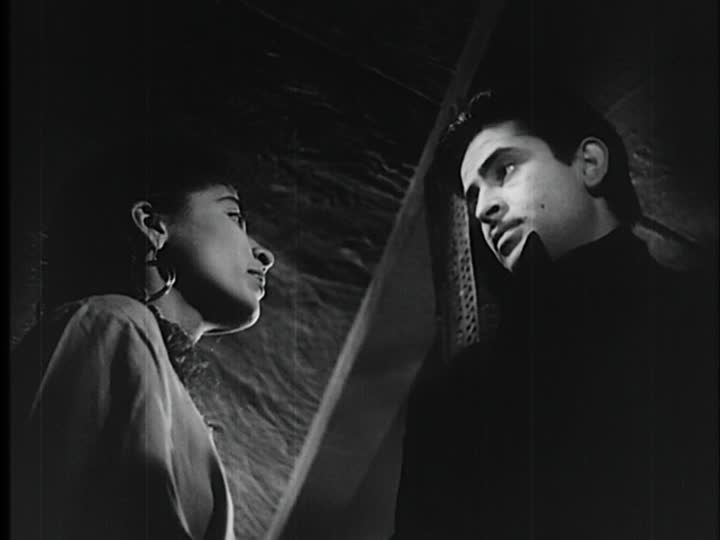
A third into Ship of Theseus I had decided that I will not be blogging about it. Two thirds in, I was almost regretting trading my trip to the gym for a trip to see it. And then the last scene happened. And it all came together. And I thought: "Ha! Ok, now that's cool!". But I was still not going to write about it. And then something weird happened: I kept thinking about it the entire way home and well into the evening. Then I started talking about it at home. And, well, here I am... Hi blog friends!!!
I saw Ship of Theseus at an advance screening before its premiere at the Toronto International Film Festival next week. And you all know how much I love TIFF, the festival that never fails to bring something to talk about on this blog. Even more so this year when there is an entire section dedicated to Mumbai filmmakers: City to City! That link, by the way, was just to make you all jealous, I won't be able to see every one of those movies, though I will try for as many as possible. Keep your fingers crossed for me to also get tickets for Midnight's Children and English Vinglish! I will need all the good karma you can send me. But back to our Ship!
Since I got one in my press kit (by the way, this is so exciting, I never got a press kit before!), here's the official synopsis:
An unusual photographer grapples with the loss of her intuitive brilliance as an aftermath of a clinical procedure. An erudite monk, confronting an ethical dilemma with a long held ideology, has to choose between principle and death. And a young stock broker, following the trail of a stolen kidney, learns how intricate morality can be. Following the separate strands of their philosophical journeys, and their eventual convergence, Ship of Theseus explores questions of identity, justice, beauty, meaning and death.
So why did I not want to write about it, you will ask. It's not that it's badly made. On the contrary, it's fabulously scripted, very well acted, and brilliantly shot. But it commits one unpardonable sin: it draaaaaags! It's almost as if the director forgot to say "cut" after every scene. So you find yourself "getting it" and then having to sit through another minute of imagery just to wrap it up. It gets tiring. I also think the film would have benefited from running the stories in parallel instead of one after the other. Even if the ideas didn't overlap (though they could have), at least we would have had a sense of cohesion throughout the film rather than feeling like we're watching three 45-minute films. But hey, we were told that there is editing still to be done, so maybe those of you watching this at TIFF will wonder what the hell I was talking about... I sincerely hope you will!
So forget all that. The content more than makes up for the lack of editing. If Ship of Theseus were a mockumentary it would begin like this: "You think you know about [insert theme]... But you have no idea!". Just kidding. But there's some truth to that. What the three stories do is take one theme (and I won't mention it because I want you all to suffer like I did until you figure it out mwahahaha!) and look at it, not from 2 antithetic points of view, but from six. Actually, seven.
Each story has two characters that are at opposite ends of the debate, each presenting an excellent string of arguments, with a seventh one thrown in at the end of the third story, adding the economic dimension (read: money). As their ideologies battle each other, the viewer gets to ponder on more than just who's right and who's wrong, a trivial question anyway. We're left analysing our own ideologies and the compromises we make.
Most of these characters are idealists: Maitreya (Neeraj Kabi), the monk, is so obstinate in his pledge for non-violence that he is willing to sacrifice his own life rather than support the pharmaceutical industry. But if you believe that you can make a difference in the positive through your fight, how much of a difference will you make in the negative by giving it up? Are your principles more important than yourself or do they end with the self? And while we're at it, what is the self anyway? A question that will keep coming back throughout the film, as expected from the title.
If Ship of Theseus were a book, this section would be the most highlighted because each line of dialogue carries some philosophical weight. Very little happens in this story, but much is talked about and every line is worth thinking about. The conversation goes from the importance of all living matter in the world to the effect that micro-organisms have on our actions and the debate is fascinating to say the least. Not many movies make me wish I could take notes, but this section sure did.
Aaliya (Aida El-Kashef), the photographer, is so passionate about her art that she follows it against every obstacle fate throws at her. She manages to create a laboratory of tools that make up for her eye-sight to the point where it seems that they also replace her craft. But when her eye-sight is restored and she doesn't need those crutches anymore she starts to doubt her own talent: how much did the tools facilitate and how much did they create? My favourite scene of the film is Aaliya in the middle of a busy intersection trying to take pictures and being assaulted by the noise, the commotion, the colours, the movement, the "subjects". The images go by at different speeds and we can really feel her confusion, her frustration, her helplessness because we're made to experience it ourselves. An excellent sample of the filmmaker's talent this scene (and the cinematographer's, for sure).
Aaliya's story reminded me of Luciano de Crescenzo's thoughts on the philosphy of Marsilio Ficino. To summarize it, de Crescenzo concludes that the human soul was built to fight against the hardships of life much like the propeller of a motorboat was built to work against the resistance of the water. Taking away the hardships is like taking away the water: it will break the engine.
Finally, the most eventful story, sees Navin (Sohum Shah), investigating the value of honesty. His preoccupation (obsession even?) with making things right leads him all the way across the world in what many would call a wild goose chase. Between lovely shots of Stockholm and heavy conversations, more questions arise: How much does ignorance excuse? Is there a best way to make amends for injustice? And last but not least: how much do principles weigh in money?
Of course the best part of the film is the last scene that reunites the three tracks and adds yet another layer to the story. But I won't spoil that for you.
I wanted to end this review with a word on the actors and a word on the cinematography, but I realize that other than finding fifty synonyms for brilliant, I can't do much else. There's a scene in the beginning of the movie where the camera closes in on a caterpillar crossing a busy corridor and we see dozens of shoes stepping around it, most of them a few centimeters shy of squashing it, though none does. That was the moment when I sank into my chair and thought: oooh, at least it's gonna be a pretty one! Luckily, it was more than just a pretty one!
To keep this in Ancient Greece territory, Ship of Theseus is like reading Plato's Dialogues: you're not there for what happens necessarily, you're there because of the questions it raises and because it makes you think about things you thought you knew in different ways. From this point of view Ship of Theseus is a fabulous experiment, one not to be missed, so here's hoping all the editing issues get resolved for its big debut at TIFF!
Ship of Theseus (2012, English, Hindi, Arabic, Swedish) Director: Anand Gandhi Starring: Sohum Shah, Aida El-Kashef, Neeraj Kabi Director of Photography: Pankaj Kumar
The IIFAs came and went from Toronto without any visible traces. Truth be told, we were not expecting people to start flocking to the theatres to watch Bollywood movies, and we were not expecting to see some major shift in people's opinions of the industry either. No. Not really. Any effect that this extravaganza will have will not be quantifiable, though who knows, maybe we'll see some changes in the audience mix at TIFF this year.
But one thing that IIFA did leave behind was an initiative of the Toronto International Film Festival (TIFF): Raj Kapoor and The Golden Age of Indian Cinema, a showcase meant to highlight the influence that the Kapoor family, whether as actors, directors or producers have had in Indian cinema. Granted, a couple of films have been added to the programme without really being connected to any of the Kapoors, but for the most part it's a Kapoor Khazana special! And what better time for it than during Kapoor Khazana, which, if you have forgotten, is a 2-month event hosted by www.totallyfilmi.com. All the links for posts so far can be found here.
Now I'm not a big fan of oldies, what with my severe case of melodrama allergy, so it's fair to ask: why am I even getting excited about a bunch of oldies being shown in a theatre? Well for starters because it's not just any theatre. This, my friends, is the house that TIFF built, commonly known as the Lightbox. It's not just a theatre, it's an experience in architectural revelry! So that definitely counts as a good reason to go.
But more importantly, how often does one get a chance, in a country other than India, to see a Mughal-e-Azam or a Shakespeare Wallah on the big screen? Even for movies I knew I wouldn't like (and my apologies to the people sitting close to me for constantly snorting and snickering during the overacted emotional scenes), I knew I could not pass on the experience of seeing them in the environment that they were made for: a theatre with a silver screen. And who knows, some might even appeal to me the second time around because it's a proven fact that the big screen makes everything better: the songs are better, the actors are prettier, the decor is more impressive, plus everything is... well... bigger. And lest we forget, Shashi Kapoor is definitely handsomer.
No really, so much handsomer on the big screen!
Now that everyone is clear on that last point, let me tell you about the movies I have seen so far. And a reminder that this goes on through July and half of August, so if you have any business in Toronto, don't forget to check it out.
:: Barsaat ::
Barsaat was one big revelation to me, and I may buy this movie just because of that. I had seen 2 or 3 Raj Kapoor movies before (on DVD) and well, I thought he was a good actor and all that but I was never bowled over and running back to the rental website to fill up my basket with more movies from him. I did love Teesri Kasam, I loved it, for sure, but I suspect it was more because of Waheeda Rehman than because of good old Raj. Well... Barsaat changed all that. I could not take my eyes off him. In fact, I was a little upset that there was so much screen time given to the other couple because honestly I just wanted to see Raj Kapoor and to hell with everything else. Yes, that was a huge shocker for me, and I will understand if no one can relate.
Barsaat is the story of two young men: Pran (Raj Kapoor) a poet / musician who believes anyone who loves with a true heart should be loved in return, and his philandering friend, Gopal (Prem Nath). As expected, Gopal only needs women as a plaything and rejects the idea of true love as the delirious invention of a poet's mind. Sure enough, there is a pure hearted girl in some village in the countryside, Neela (Nimmi) who is madly in love with Gopal and is convinced that he will come back to her. I confess, most of my eyerolls were dedicated to her, since she was by far the most drama-infused character in the story. Not that other characters don't suffer tragically as the movie progresses, but this poor girl spends all her time pining and forgetting to breathe, if I didn't find it so funny, I would have felt really bad for her.
A small sample in this song. which by the way, is the original I Hate Luv Storys title song!
Raj Kapoor is paired up with his legendary leading lady, Nargis. Now I confess I never quite got the "beauty" of Nargis, but I suppose that's not really important, what's important is that in this particular movie I could not get over her sniffling. I suppose it's a way of making the character cute and um... more country girl? But it made no sense to me. She is cute. And clueless. I guess in a modern film she'd be ditsy. But cute.
Anyway... The drama of the story is that Reshma finds out her father had fixed her marriage for fear of the traveler (Pran) turning out to be just another Bombay playboy. In the swirl of emotions following this conversation, her father tries to kill Reshma who is swimming across the river to get to Pran. As any respectable father would.
On the other far less interesting side of the story, Neela has damaged her lungs so much from all that pining and breath holding that she is about to die without Gopal. Just kidding. Well, not really. She is pretty much dying from pining, no other visible reason. Oh and she disappears in the second half almost until the end.
So why would I put Barsaat in my basket as soon as I got home that day? Well for one because I got the length of the movie wrong and had plans for immediately after so I had to leave at intermission. But really that's not it. The real reason was this is the first (and so far only) movie where I found Raj Kapoor unbelievably attractive. He's cute and adorable and such a joy to watch that I couldn't let this movie go into oblivion like the rest of them. The songs of course, were the second reason, and the art direction, a close third.
I dare anyone to make a shot as dramatic as this one in colour!
Gosh, almost like a Picasso painting!
If you can handle your melodrama better than me (which I suspect most people can), this might be a good one to catch for a different taste of Raj Kapoor when he actually smiles and is playful rather than tormented or silly.
Yes, I admit, this was my favourite scene!
Well, at least in the first half he looks happy. Also, watch it if you like your Waves of the Danube, it gets a LOT of ear time!
All that said, if I see one more woman throwing herself at the feet of one more man, I may just scream right in the middle of the theatre! Oh well... At least Barsaat had this little moment to make up for it.
:: Shakespeare Wallah ::
Now this is a movie I had been searching for for at least 2 years. I'm not very sure why I was searching for it, but I was damn certain I would love it. So the skies just opened up and a choir of putti started singing when my Canada Day weekend plans fell through and I found myself in the city with nothing but time between me and Shakespeare Wallah. Did it meet all my expectations? Was it worth spending a long weekend in the city for it? Yes and YES!
Sanju (Shashi Kapoor) is a handsome playboy from Bombay, who meets and woos an English actress, Lizzie, traveling with her family, staging Shakespeare plays across the country. Meanwhile he has a long standing relationship with a local film actress, Manjula. Shashi plays both heroines with such devilish charm that for a while I could not tell for sure if he was even involved with the film actress. I guess I'd be a sucker for his sweet words if I were the English girl, who in fact, turns out to be much smarter and much stronger than we initially give her credit for. I'm not surprised this movie needed a white actress because no proper Hindustani maiden would have been accepted in that role. Well, not unless she killed herself, died or was otherwise prevented from leading a decent life at the end of the film. Also, I can't think of one who would have done justice to the role either.
A short but sweet movie, Shakespeare Wallah talks among other things about the nadir of British influenced culture, pitching Shakespeare against Bollywood films. But the main theme of the film is change. The times were changing, people's lives were changing, societal norms were changing, and all these changes are subtly captured by a family who is neither from here nor from there, a family of British actors that have been in India for so long that they call it home, but they still can't let go completely of their past on another continent. The head of the family, Mr. Buckingham (Geoffrey Kendall) is the one we see most often voicing his concerns about this brave and young new world taking over, while his wife is usually the sounding board that reflects everything back after straining it through the concern for her daughter (whom she wants to send to England) and mixing it with a healthy dose of optimism.
Shakespeare Wallah is a fascinating watch as a social fresco, but that implies of course, that one can take their eyes off the mesmerizing Shashi Kapoor. Not easy, let me tell you, not easy. Nonetheless, if you do manage, you will find a strong female character that is willing to give up anything for love but will not be weighed down by its absence. Needless to say she was my favourite part of the film. The parents, struggling to keep their ideals alive while their post-colonial world is crumbling around them, were another highlight. But the most important highlight for me was the lack of weepy melodrama and weak characters. Everyone in this movie knows what they want and even in situations where they are helpless, there is no majboori-ness in sight.
One of the best movies I have seen lately, and definitely my favourite oldie so far.
:: Aag ::
Yes, it is dubbed Aaaaaaaag for a reason! And that reason is you will want to scream at the screen at least every ten minutes. Unless you're in a theatre full of people where you must limit your reactions to giggles, eye-rolls and frequent washroom and Twitter breaks.
No, that wasn't me I swear!
Ok... it was me.
This movie is so over the top in its emotions, that Greek tragedy as a genre pales in comparison. Never before has choosing a career been such a life and death issue. And never before has a man been so obstinately determined to find a muse and fulfil his childhood dream as Kewal is (Raj Kapoor). One thing this movie would never run out of is pathos.
I mean just look at the poster!
Also, apparently, they will never run out of Nimmis, there's a new one at every corner.
Jokes aside (though you can tell that was pretty much a summary of the experience the person next to me had while trying to watch the movie), there is a very interesting theme that Aag brings up, and with a better treatment this theme could have turned the film into a favourite of mine. We're not just seeing the misunderstood artist, or the Galatea who cannot live up to the expectations of her Pygmalion, or the artist's search for truth. We're seeing a clash between different visions on art and its meaning.
We don't get to debate whether physical beauty is more powerful than the beauty of one's soul, instead we are asked to reflect on the true origin of art: is it one with Truth or is it one with Beauty? As Kewal keeps searching for that fountain of truth inside Nimmi's soul, we realize that we cannot be sure how much truth there is inside his own soul, and whether or not it's his own truth that he hopes to uncover inside her. His constant search for the muse of his childhood and his impotence in fulfilling his only dream present him as an incomplete artist, one who perhaps will never find his own soul and his true inspiration. Or if he does, will it be too late? Is burning the outer shell and bearing one's soul really the only way to be a complete artist? Or is the need for compromise and empathy a sine qua non condition for finding your truth in this imperfect world? The last scene will give us a hint.
Interestingly the one accomplished artist of the film is ridiculed by Kewal, however, he is the one who empowers the young man to fulfil his dream of putting a play on stage. He is after all the only one to come out victorious. Perhaps a little moment of reflection on the always underappreciated patrons of arts? Or a bone thrown to the dogs?
With a somewhat predictable and yet somewhat open ending, the film doesn't answer any of these questions. I didn't want it to either. But I did want to be able to reflect upon the philosophy behind it without cringing and laughing at the memory of Nargis, hand to forehead, a vision of artificial tragedy that will probably haunt me until the end of my days.
Nonetheless, my $12 were once again well spent on seeing a very young and very talented Shashi Kapoor playing the role of young Kewal, and also by the exquisite art direction. When they say they don't make them like they used to, Aag is a good example, for better AND worse.
:: Mughal-e-Azam ::
What a difference the big screen makes! I didn't care much for Mughal-e-Azam when I rented the colourized version and watched it, except for the fabulous songs. But what I didn't know then was that you need a big screen to realize the sheer opulence of this movie, to see just how epic every single frame in it is. And epic is a word I used a lot after this screening and will probably always use going forward whenever Mughal-e-Azam is discussed.
It's not only the movie that needed the big screen, the legendary Madhubala also needed it to prove to me why so many consider her beauty breathtaking. I didn't think much of her before, but she really is beautiful beyond words on the big screen, the lady was made for black and white and for the silver screen, there is no doubt in my mind about that now.
Mughal-e-Azam in short, is the story of Akbar the Great's heir falling in love with a court dancer. Akbar opposes, naturally, which only strengthens the youngsters' resolve to see their love triumph. A classic conflict between the old order and the new, between love and duty, between parents and lovers, between mind and heart. And if you think this plot doesn't warrant a 3.5 hour extravaganza, watch this one to be proved wrong.
When I decided to go see this at the Lightbox I said I was only going for the songs. And while I came out of it with so many other magnificent moments to remember, I have to say the fact that I saw Teri Mehfil Mein on the big screen is still, by far, the highlight of my entire Lightbox experience (sorry Shashi, you're second). Everything about this song from the lyrics to the vocals to the music to the camerawork to the expressions of the singers is sheer perfection. I have yet to see another that challenges its status in my heart. I can't find a video to embed in black and white so follow the link above, or watch below in colour.
Apart from the opulence of the visuals in general, there are little moments of brilliant camerawork that will stay with you even when the glitter of the palace halls has worn out: Madhubala's face lit by a single candle, the twinkle in her eyes that will soon become a tear while another is already slithering its way down her cheek, these are the moments that celebrate black and white films in a way that colour can only aspire to.
Not even the plot bothered me as much as the first time, proof that either the big screen, or the black and white, or a second viewing does improve this one (not sure which of the three, could be all of them). It's still over the top like nothing else, but somewhere in the middle of the amazing songs and in between gasps at the brilliant use of lighting, I even forgot to snicker a few times. What an experience this movie is. No wonder it was unsurpassed for years and years, it's sheer awe to watch it in all its glory.
And now what you ask? Now I have commitments that prevent me from catching a lot of other gems that are scheduled during this event, but I do have plans to see at least another 3, so look out for Part 2 of this post in August. Unless they're all really really bad, in which case... well, I'll spare everyone the eyerolls.
You know that white girl that all the desis turn around to look at in a theatre playing Indian movies and then they proceed to talk quite loudly in Hindi about how she's probably lost? Yea, that's me every other week.
Beyond this very important detail, more about me on the About the Author page.